
Dr. Ashish Jagtiani
Co-founder & Partner, Twenty Seven Labs · Former Co-founder & CTO, Chronus Health
I build diagnostic instruments — and the companies around them.
Twenty years reading biology electrically: Coulter counters at Akron, biosensors at IBM Research, and a whole-blood CBC/CMP cartridge at Chronus Health. Now: Twenty Seven Labs, and automating the lab.
Now
September 2026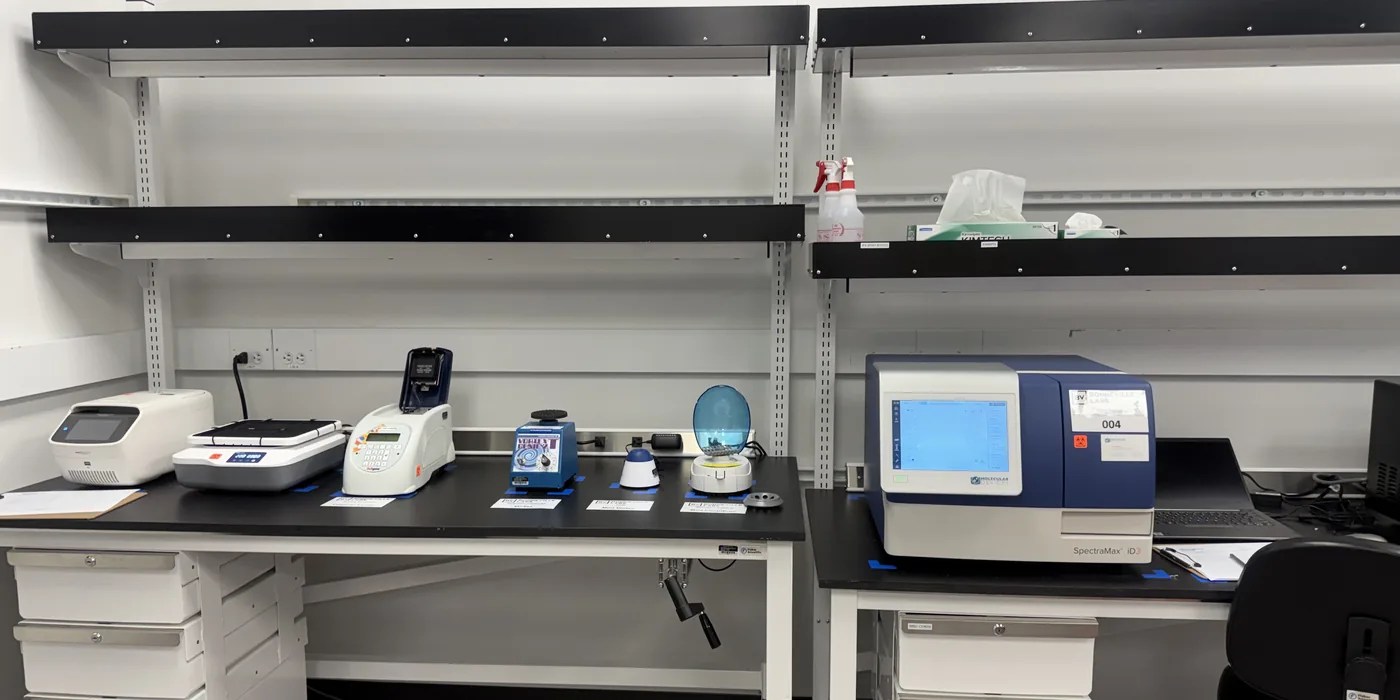
Twenty Seven Labs. A diagnostics and biosensor studio I co-founded with Rajinder Bhatia. We work with startups, labs, and investors on assay development, sensor platforms, and diagnostic systems — from the bench up, not just from the whiteboard.
Something new in AI × life science. In stealth for now. It sits where automation, machine learning, and wet-lab work meet — the thread that runs through Mr. Lazy. More when it's ready.
Looking for. Founders building diagnostics or biosensors who want a technical partner who has taken one from concept to a clinical study. Say hello.
Selected Work
Chronus Health
Co-founder & CTO · 2017–2024
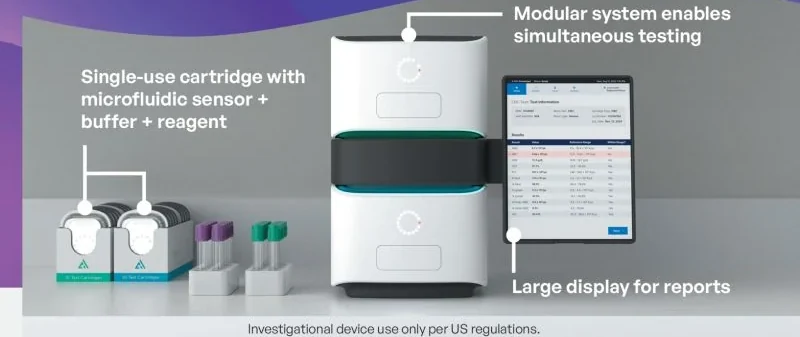
A whole-blood CBC, CMP, and electrolyte cartridge with no optics and no sample prep — impedance for cells, aptamer amperometry for proteins, ion-selective electrodes for electrolytes. Correlation up to r² 0.99 against lab analyzers in a 25-volunteer IRB study. $28M+ raised; FDA pre-submission filed.
Read the case studyIBM T.J. Watson Research Center
Research Scientist & Senior Process Engineer · 2011–2017
Reactive-ion etch processes for 200 mm semiconductor devices, and FET, capacitive, and extended-gate biosensors that put protein detection on a chip. Four issued patents; a JVSTA Editor's Pick; contributor to the KACST–IBM Nanotechnology Center of Excellence.
One problem, twenty years
Most of my work is one problem seen from different angles: reading biology electrically. At Akron it was multiplexed microfluidic Coulter counters — counting and sizing particles by the current they displace. At IBM Research it was the same instinct at the nanoscale: field-effect, capacitive, and extended-gate biosensors, plus the plasma-etch processes to make them.
At Chronus Health all of it went into one disposable: impedance for cells, amperometry for proteins, potentiometry for ions, from undiluted whole blood, validated against lab analyzers — and the chemistry, microfabrication, electronics, software, and manufacturing had to agree with each other at a sub-dollar cartridge cost.
That integration — getting a sensor, a cartridge, a reader, and a team to work as one system — is what I'm unusually good at, and what I now do for other people's products at Twenty Seven Labs.
Writing
All essaysBuilding a diagnostic or a biosensor?
If you want someone who has taken one from bench to clinical study — and can still do the bench work — write to me.